Machining complex parts for vacuum and ultra-high vacuum (UHV)
ARCOM Industrie manufactures parts and accessories for vacuum and ultra-high vacuum environments, where cleanliness, leak-tightness and dimensional stability are critical.
In these applications, surface finish control and finishing quality directly affect installation performance.
Vacuum and UHV-specific constraints
A vacuum is an environment in which molecules are highly rarefied.
Ultra-high vacuum involves extremely low pressure levels, requiring particular attention to leak-tightness, surface finishes and material compatibility.
The manufacturing quality of components determines the overall performance of the systems, especially in very high-precision environments.
Materials used
Components for these applications are mainly made from stainless steel, aluminium, engineering plastics or steel, depending on pressure and environmental constraints.
The choice of materials depends on the mechanical, thermal and environmental requirements defined by the customer.
Expertise applied to vacuum and UHV
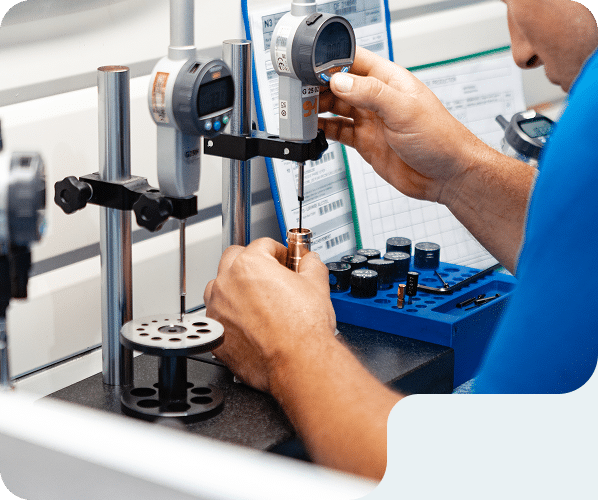
Manufacturing components for these environments combines precision machining and bar turning with rigorous dimensional inspection.
Depending on the configuration, ARCOM Industrie also carries out assembly and welding operations suited to sealing requirements.
Applications
Our components are intended for installations and equipment used in particular in:
- Semiconductors
- Photovoltaics
- Research laboratories
Part cleanliness and finishing
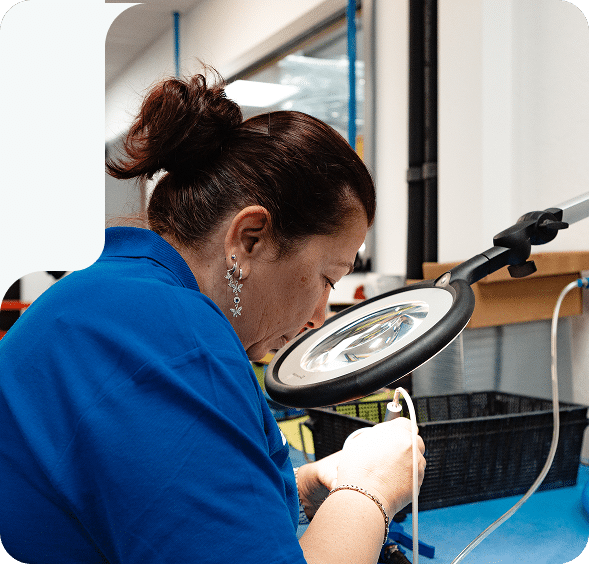
Parts for vacuum and ultra-high vacuum must offer a high level of cleanliness and suitable finishes. ARCOM Industrie applies modified-alcohol washing procedures, rigorous surface finish inspection and specific packaging according to customer requirements.
Traceability can be ensured by laser marking when required.
Our industries
Our other industrial expertise
A project for a vacuum application?
Are you developing a component for a vacuum or ultra-high vacuum environment?
Our teams help you define manufacturing parameters suited to the expected cleanliness, leak-tightness and stability requirements.